
USDT Betting Sites India 2026 Laws Risks Crypto Guide
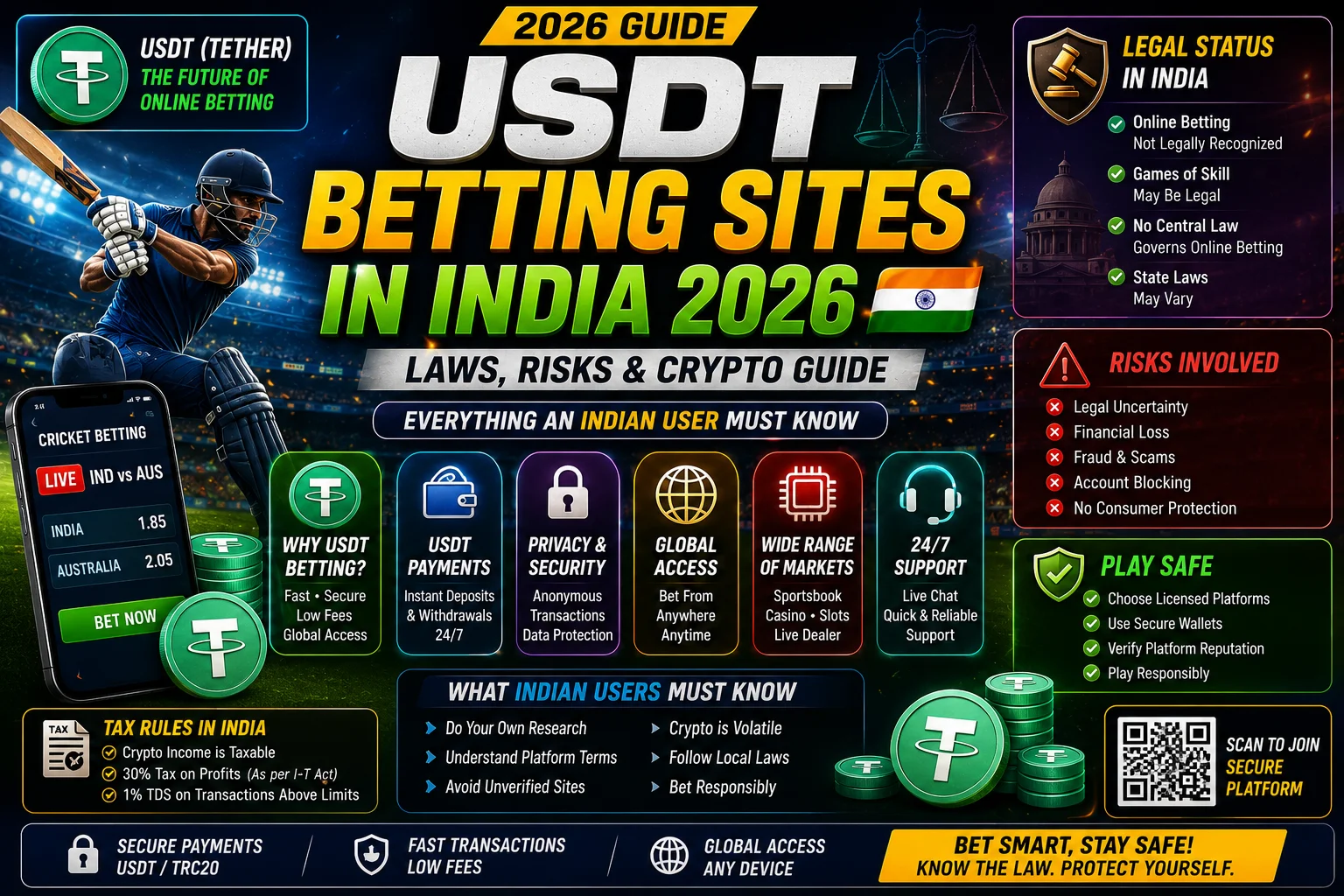
USDT betting sites operate in a legal gray area in India. No central law explicitly bans cryptocurrency gambling, but the Public Gambling Act of 1867 and state-level regulations create significant risks. Indian users who bet with USDT (Tether) do so without consumer protection, and financial penalties are possible.
Crypto gambling has quietly carved out a significant presence in India. As traditional payment methods face tighter restrictions from the Reserve Bank of India (RBI), a growing number of Indian bettors have turned to stablecoins—particularly USDT (Tether)—as a workaround. The appeal is straightforward: fast transactions, relative anonymity, and no dependence on rupee-linked bank transfers.
But convenience doesn’t equal legality. The legal landscape surrounding USDT betting in India in 2026 remains murky, fragmented across state lines, and subject to rapid regulatory shifts. Understanding where you stand before depositing funds isn’t just smart—it may save you from serious financial and legal consequences.
This guide breaks down how USDT betting works in India, what the law actually says, what risks Indian users face in 2026, and what to look for if you decide to use a crypto betting platform.
What Is USDT and Why Are Bettors Using It
USDT, issued by Tether Limited, is a stablecoin pegged 1:1 to the US dollar. Unlike Bitcoin or Ethereum, its value doesn’t fluctuate wildly—making it a practical tool for betting, where predictable deposit and withdrawal values matter.
For Indian bettors specifically, USDT offers three core advantages:
Speed: Crypto transactions settle far faster than bank transfers or UPI payments blocked by payment processors.
Borderless access: USDT can be sent to offshore betting platforms without triggering the same friction as INR bank transfers.
Price stability: Bettors aren’t exposed to crypto volatility between deposit and withdrawal—unlike Bitcoin-based platforms.
According to Chainalysis’s 2024 Crypto Adoption Index, India ranked among the top three countries globally for peer-to-peer crypto transaction volume, reflecting the scale of grassroots crypto usage—including on gambling platforms.
Is Crypto Betting Legal in India in 2026
The short answer: it depends on where you live and how you define “gambling.”
India does not have a unified national gambling law. The Public Gambling Act of 1867—India’s primary central legislation—predates the internet entirely and says nothing about cryptocurrency. This leaves a fragmented regulatory picture:
What the Public Gambling Act of 1867 Says
The Act prohibits operating or visiting a “common gaming house.” It makes no mention of online platforms, offshore operators, or digital currencies. Courts and regulators have struggled to apply it consistently to the internet era, let alone to blockchain transactions.
State-Level Gambling Laws in India
Gambling regulation is largely a state subject under the Indian Constitution. States like Goa, Sikkim, and Daman have legalized certain forms of gambling and issued licenses. Others, including Andhra Pradesh, Telangana, and Tamil Nadu, have enacted outright bans on online gambling—some of which have faced legal challenges.
For USDT betting specifically, no Indian state has passed legislation that directly addresses stablecoin or cryptocurrency gambling as of 2026. That absence of regulation is not the same as permission.
The RBI’s Position on Crypto in 2026
The Reserve Bank of India has historically maintained a cautious stance on cryptocurrency. While the Supreme Court overturned the RBI’s 2018 banking ban in 2020, the RBI continues to discourage crypto use and has lobbied for stricter oversight. Indian banks and payment processors frequently block transactions to known gambling platforms—pushing users toward crypto as an alternative.
India’s 2022 budget introduced a 30% flat tax on crypto gains and a 1% TDS (Tax Deducted at Source) on crypto transfers above certain thresholds. Betting winnings converted through USDT fall squarely within the scope of taxable crypto income.
How USDT Betting Sites Work for Indian Users
Most USDT betting platforms targeting Indian users are offshore operators—licensed in jurisdictions like Curaçao, Malta, or Gibraltar. They don’t hold Indian licenses, which means they operate outside the regulatory reach of Indian authorities.
Here’s the typical user journey:
Purchase USDT via a centralized exchange like CoinDCX, WazirX, or Binance using INR.
Transfer USDT to a personal wallet (Metamask, Trust Wallet, etc.).
Deposit to the betting platform using the platform’s USDT wallet address.
Place bets on sports, casino games, or other markets.
Withdraw winnings back to a personal wallet, then convert to INR via an exchange.
The process sidesteps traditional banking entirely—which is precisely why regulators are paying closer attention to crypto-to-fiat conversion points.
What Are the Real Risks of USDT Betting in India
Understanding the risks isn’t about discouraging participation—it’s about making an informed decision.
Legal Risk
Using an unlicensed offshore platform isn’t explicitly criminalized for individual users under most Indian laws. However, enforcement is unpredictable. State police in Tamil Nadu and Andhra Pradesh have taken action against individual online gamblers under local ordinances. The risk is low but not zero.
Financial Risk
Offshore platforms carry no obligation to protect Indian users’ funds. If a platform shuts down, gets hacked, or withholds withdrawals, there is no regulatory body to complain to and no insurance scheme covering losses.
Tax Compliance Risk
India’s crypto tax framework applies to USDT transactions. Failing to declare betting winnings or USDT gains could trigger scrutiny from the Income Tax Department. With increasing KYC requirements on Indian crypto exchanges, anonymity is diminishing.
Scam Risk
The crypto betting space attracts fraudulent platforms. Sites that mimic legitimate operators, manipulate odds, or simply disappear after accumulating deposits are a documented threat.
What to Look for in a USDT Betting Platform in 2026
If you choose to use a USDT betting site, due diligence matters. Here’s what separates credible platforms from risky ones:
Licensing: Look for a valid license from Curaçao eGaming, the Malta Gaming Authority (MGA), or the UK Gambling Commission. These don’t make a platform legal in India, but they indicate operational accountability.
Provably fair technology: Reputable crypto casinos use blockchain-verifiable random number generation, allowing users to independently verify game outcomes.
Transparent withdrawal policies: Avoid platforms that impose unreasonable withdrawal limits, lengthy verification delays, or opaque fee structures.
Responsive support: A platform without accessible customer service is a warning sign.
Reputation and reviews: Cross-reference platforms on independent review sites and crypto gambling communities before depositing.
How Indian Crypto Gambling Regulations Could Change in 2026
India’s regulatory environment is shifting. Several developments signal tighter oversight ahead:
The Digital Personal Data Protection Act (2023) increases scrutiny on how platforms collect and store Indian user data.
The Financial Intelligence Unit (FIU) issued show-cause notices to offshore crypto exchanges in 2023 for operating without compliance frameworks—a sign that regulators are extending reach into the crypto space.
FATF pressure on India to strengthen anti-money laundering (AML) controls may accelerate legislation targeting crypto gambling flows.
A comprehensive online gambling or crypto gambling law at the national level remains under discussion but has not been passed as of mid-2026. Regulatory clarity, when it comes, is more likely to introduce licensing frameworks than blanket bans—mirroring approaches taken in the UK and regulated European markets.
Should You Use a USDT Betting Site in India
Choose USDT betting if: You are in a state without an explicit online gambling ban, you are prepared to manage your tax obligations under India’s crypto framework, and you are using a licensed offshore platform with a verified track record.
Avoid USDT betting if: You are in Andhra Pradesh, Telangana, or Tamil Nadu (where state laws pose greater personal risk), you cannot afford to lose the funds deposited, or you are unfamiliar with how to securely manage a crypto wallet.
The fundamental question is risk tolerance—legal, financial, and practical. USDT betting isn’t going away, and Indian regulatory frameworks will eventually catch up. For now, the responsibility of due diligence rests entirely with the user.
Frequently Asked Questions
Is USDT betting legal in India in 2026?
USDT betting exists in a legal gray area. No national law explicitly bans cryptocurrency gambling, but state-level laws, the Public Gambling Act of 1867, and RBI crypto guidelines create a complex and risky environment. Users in states like Andhra Pradesh and Tamil Nadu face the greatest legal exposure.
Do I need to pay tax on USDT betting winnings in India?
Yes. India’s 2022 crypto tax law imposes a flat 30% tax on all crypto gains, including gambling winnings converted via USDT. A 1% TDS also applies to certain crypto transfers. Failure to declare winnings can result in penalties from the Income Tax Department.
Are USDT betting sites licensed in India?
No licensed USDT betting sites operate under an Indian gambling license. All USDT betting platforms accessible to Indian users are offshore operators, typically licensed in Curaçao, Malta, or Gibraltar.
How do I buy USDT in India to bet online?
Indian users can purchase USDT on regulated exchanges such as CoinDCX, WazirX, or Binance using INR via UPI or bank transfer. USDT is then transferred to a personal wallet before being deposited to a betting platform.
What happens if a USDT betting site refuses to pay out my winnings?
Since offshore platforms operate outside Indian jurisdiction, there is no consumer protection authority you can escalate to. Your recourse is limited to platform dispute resolution, public complaints on review sites, and—in extreme cases—community-based pressure. This is a core risk of using unlicensed platforms.
Can Indian authorities track USDT betting transactions?
Blockchain transactions are pseudonymous, not anonymous. Indian tax authorities and the FIU increasingly collaborate with crypto exchanges to trace USDT flows. With mandatory KYC on Indian exchanges, the conversion of USDT back to INR creates a visible record.
Will India legalize online crypto gambling in the future?
India has been moving toward regulatory frameworks rather than blanket bans for digital industries. A structured licensing regime for online gambling—potentially including crypto platforms—is a plausible outcome, particularly given the tax revenue potential. However, no confirmed timeline exists as of 2026.
Proceed With Clarity, Not Assumptions
The USDT betting landscape in India reflects a broader tension between technological adoption and regulatory lag. Tether’s stability makes it a practical betting currency; India’s legal ambiguity makes its use genuinely risky.
The most important step any Indian bettor can take is to understand the specific laws of their state, comply with India’s crypto tax obligations, and select platforms with verifiable licensing and clean withdrawal records. The platforms themselves won’t protect you—that responsibility is yours.
Stay informed as India’s digital gambling regulations evolve in 2026 and beyond. Regulatory frameworks, when they arrive, will reward users who have been operating responsibly