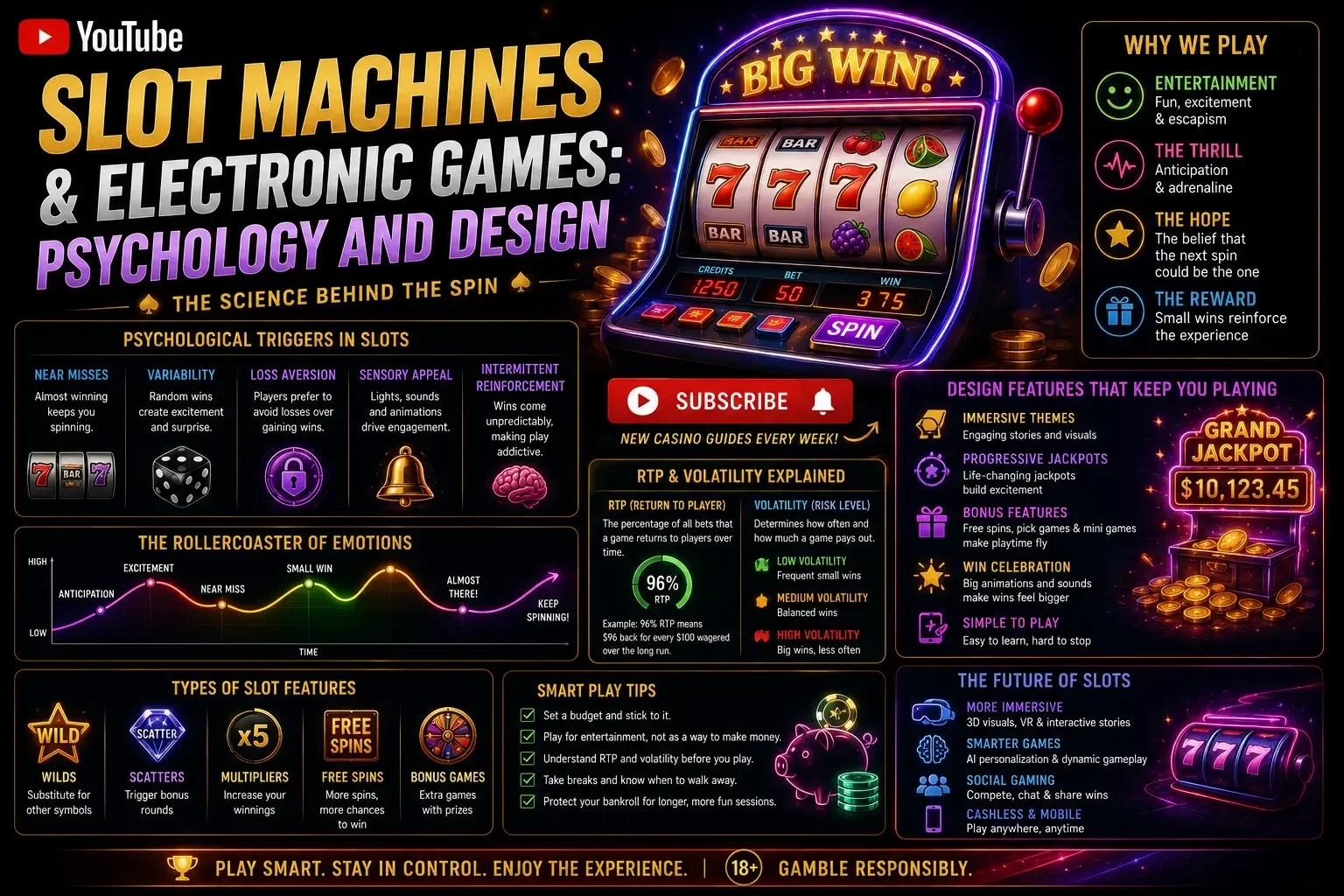
Slots represent the main component of a multi-billion-dollar worldwide sector: an instrument that has relentlessly kept abreast with the advancement of technology. The games generate about 70 percent of the total revenue of the average casino, a financial monster. Yet this economic dominance obscures a fundamental paradox: slots are simultaneously the most mathematically transparent games in casinos (RTP and volatility ratings publicly available) and the most psychologically designed to encourage extended play.laser247
Origins From Mechanical Lever to Invisible Algorithm
The first slot machine, the Liberty Bell, was created by Charles Fey in 1895. It was a simple mechanical device with three spinning reels, offering modest payouts. Over the years, these machines evolved, moving from mechanical reels to fully digital versions with elaborate themes and sophisticated technology. This evolution represents far more than technological progressit documents the progressive refinement of human-machine interaction designed to increase player engagement laser247 cricket
Between 1890 and 1990, slot machines transformed not only technologically but psychologically, as designers refined sound, light, rhythm and control surfaces to guide player engagement in increasingly subtle ways. The lever’s theatrical pull, the decisive click of a button, the glow of cathode-ray displays and the cadence of digital chimes each shaped how players perceived risk, reward and control laser247 login
A crucial innovation occurred in the transition from mechanical to digital devices. A developer named Telnaes suggested a scheme in which physical (or visual) reel positions are mapped to a very large, invisible array of “virtual” positions in the memory of the software. A cherry that pays low could be coded to 100 virtual stops, whilst the progressive jackpot symbol could be coded to only one. This made the same machines provide radically different volatility curves and multi-million dollar dividends depending solely on obscure software code described in voluminous Probability and Accounting Reports laser247 id
This transition—from visible mechanical reels to invisible algorithmic distributions fundamentally altered the player’s relationship to slots. Players could no longer inspect the physical mechanism. They could no longer understand, through observation, how outcomes were determined. The machine became a black box: transparent in its mathematical reporting (RTP and volatility disclosed), yet opaque in its actual operational logic.
The Mathematical Transparency RTP and Volatility
Modern slot regulation has imposed unprecedented mathematical transparency. RTP (Return to Player) is the theoretical percentage of total wagered money that a slot machine or casino game is designed to pay back to players over time. An RTP of 96% means that, on average, the game returns $96 for every $100 wagered, with the remaining $4 representing the house edge. laser247 WhatsApp
Volatility defines how often and how much a slot pays. Together, slot volatility and RTP determine risk, reward, and overall player experience. RTP refers to the potential percentage that a player may expect to get back in a specific number of spins or wins, while slot volatility is the size and regularity with which the game pays out (low, medium, or high volatility slots).
This mathematical framework creates an illusion of player empowerment. In 2026, transparency has become the industry’s gold standard. Developers are now required in most jurisdictions to display real-time Return to Player (RTP) and Volatility ratings. Before you place a single bet, you must understand that every slot has a “personality” defined by its code. Players can select games based on disclosed mathematical parameters, seemingly exercising informed choice. laser 247 cricket id
Yet a crucial limitation undermines this transparency. The biggest misconception about RTP is thinking it applies to your gaming session. You might lose some money on a 97% RTP slot, or you could hit a massive jackpot on a 94% RTP game. RTP only becomes meaningful over extremely long periods of play. Mathematical transparency operates at a scale—millions of spins that no individual player will experience. For any person in any session, RTP is theoretical abstraction, not predictive information.
The Psychological Architecture: Variable Rewards and Designed Engagement
Beneath the mathematical transparency lies a sophisticated psychological infrastructure designed to maximize engagement duration and spending. Variable reward schedules, where wins come unpredictably, reinforce gambling behavior. Slot machines are masters of this technique. You never know when the next win is coming, and that unpredictability is exactly what keeps you spinning. It’s the same mechanism that makes slot machines more addictive than other types of gambling, like poker, where the results are more skill-based.laser247 ipl 2026
This psychological mechanism operates regardless of RTP or volatility disclosure. The cognitive biases we’ve discussed – the gambler’s fallacy, illusion of control, confirmation bias, availability heuristic, and loss chasing behavior – all contribute to the allure of slot machines. These mental shortcuts can lead players to misinterpret their chances of winning and continue playing even when it’s no longer in their best interest.
Modern slot design incorporates multiple psychological mechanisms beyond variable rewards. Losses disguised as wins (LDWs) are a sneaky design feature of slot machines. This occurs when a player technically loses money but the machine still celebrates the result as a win because the payout is smaller than the original bet. The machine displays celebration animations—lights, sounds, imagery—for outcomes that mathematically constitute losses. The player’s sensory experience contradicts their economic reality.
Even more precisely targeted is the near-miss effect. In early mechanical slot machines, near misses occurred occasionally due to physical limitations. But as slots became digital, developers began simulating near-win events intentionally — using programmed reel stops and visual cues that mimic closeness to a win, even if the odds remain unchanged. Today, near misses are a designed feature, not a bug. Developers employ sound effects, timed animations, and even screen shake to heighten the emotional impact of just-missed wins. laser247 upi
Even without a monetary prize, the brain can release dopamine in response to a near win, reinforcing the desire to continue playing. Modern slots don’t merely report mathematical outcomes they manipulate neurochemical responses to those outcomes.
The Sophistication Gap Operator Intelligence vs. Player Knowledge
A crucial asymmetry exists in slot machine ecosystems. Operators and developers possess comprehensive knowledge of psychological mechanics; players typically do not. Some games even adjust the frequency of near misses using player segmentation data — essentially tailoring the psychological pressure to different engagement patterns. Casinos analyze individual player behavior and customize psychological pressure accordingly.
Most modern slots ship in multiple RTP versions — commonly around 96%, 94%, and 88% — and the operator, not the player, chooses which one runs in the lobby, which makes RTP-version selection one of the most direct levers on house margin available to a casino. Players cannot see which RTP version they’re playing. The disclosed transparency of RTP as a concept masks operator discretion in selecting which version of a game appears in casinos.
Strategic Selection Matching Psychology to Bankroll
Modern slot strategy recognizes that RTP and volatility are insufficient guidance without understanding psychological mechanisms. In 2026, professional “bonus hunters” use a different strategy than “thrill seekers.” Your choice of slot should be a direct reflection of what you want to achieve during your session.laser247 exchange
Bonus hunters require different mathematics than jackpot hunters. If you have claimed a welcome bonus and need to finish a 35x wagering requirement, your enemy is “Variance.” You need a game that gives you back small wins constantly to keep your balance steady while you churn through the requirement. Game Choice: Low Volatility slots with an RTP above 97%. Betting Tactic: Flat betting (keeping the same small bet size) for the entire session.laser247 demo id
Conversely, jackpot hunters intentionally accept lower expected value. For players chasing the “viral” wins seen on social media streams, the focus shifts to Bonus Buy features and High Volatility engines. In 2026, games like Money Train 4 or Gates of Olympus 1000 are built for this. Game Choice: High Volatility slots with “Max Win” potential over 10,000x. Betting Tactic: Small base bets to survive “dry runs,” or using “Ante Bets” to double the chance of hitting the bonus feature.laser247 new link
Yet all these strategies require discipline and knowledge. A gold-standard rule in 2026 is to never bet more than 1% of your total session bankroll on a single spin. If you have $100 for the afternoon, your bets should be $1.00 or less. This ensures you can survive at least 100 spins, which is statistically the minimum needed to see the “true” behavior of most modern slot RNGs.
The Sensory Illusion of Control
A final layer of psychological design operates through perceived control. Understanding this evolution clarifies that gambling devices are designed experiences — constructed as much through sensory psychology as through mechanical or electronic calculation.laser247 session market
Classic slots, often called “fruit machines” or “one-armed bandits,” rely on simplicity. The player could see the reels spinning physically, and the famous side lever gave a tactile sense of control over the outcome. The shift to video screens allowed developers to break the laws of physics.
Yet this apparent removal of control paradoxically strengthens engagement for some players. Why do classic slots survive in an era of 4K graphics? Nostalgia is a powerful drug. For many, the sound of a mechanical reel stop brings back memories of physical casinos or pubs. Classic slots, by design, are timeless because they refuse to change. If you play to relax and dislike complex rules, classic slots are the superior choice. The cognitive load is low; you press a button and know the result instantly. laser247 crypto
The Regulatory Challenge Transparency Without Protection
Regulatory bodies face an inherent problem: mathematical transparency (RTP/volatility disclosure) doesn’t address psychological vulnerability. Industry language often reframes these as cosmetic upgrades or optional features. “But, these are not incidental design choices. They are deliberate monetisation mechanisms.” Together, these features create a ‘variable reward system’. Rewards are delivered unpredictably, which produces persistent and often compulsive engagement. This is the same principle that underpins slot machines. laser247 3 million users
As concerns grow about the addictive potential of certain mechanics, regulators are starting to take notice. In the Netherlands, for example, authorities have proposed limits on animations and sound effects that might mislead players. Meanwhile, the UK Gambling Commission has issued new guidance calling for greater transparency around how outcomes are presented and for the removal of potentially manipulative features.
Conclusion The Paradox of Transparent Manipulation
Slot machines and electronic games represent a curious achievement: mathematical systems so transparent in their theoretical operation that regulatory bodies can certify their fairness, yet psychologically opaque enough that players misunderstand their own engagement mechanisms. RTP and volatility ratings create an appearance of informed choice while sophisticated psychological design undermines rational decision-making.
The online gambling industry is destined to hit an astounding figure of $133.00 billion by 2029, mostly through the massive expansion and digital innovation of online slot offerings. This growth occurs not because players better understand slot mathematics, but because psychological mechanisms have become increasingly sophisticated while appearing—through regulated disclosure increasingly transparent.laser247 customer care
The slot machine remains the casino’s primary revenue generator precisely because it solves the following problem: how to create a game where mathematical fairness (certified RTP) coexists with psychological manipulation (variable rewards, near misses, losses disguised as wins). Slots don’t pretend to require skill. They don’t suggest player decisions matter. Yet through sensory engineering and algorithmic subtlety, they convince players to continue spending in direct proportion to their understanding that they shouldn’t.laser247 vs tigerexch